

Paul Debevec
Senior Staff Scientist, Google Research
Paul is a Senior Staff Scientist at Google Research and an Adjunct Research Professor at the Institute for Creative Technologies at USC. Debevec's research in photogrammetry, image-based modeling and rendering, high dynamic range photography, image-based lighting, appearance acquisition, facial scanning, and photorealistic digital actors has been recognized with the ACM SIGGRAPH's first Significant New Researcher award in 2001, the Academy's Scientific and Engineering Award in 2010, the SMPTE Medal of Progress in 2017, and a second Academy Technical Award in 2019. In 2002, he originated the technique of enveloping actors with real-world image-based LED lighting for virtual production. His techniques have been used to create important visual effects sequences in films such as "The Matrix," "Spider-Man 2," "The Curious Case of Benjamin Button," "Avatar," "Furious 7," "Blade Runner 2049," "The Irishman," "Gemini Man," and to create a 3D portrait of the American President, Barack Obama. More information at: www.debevec.org.

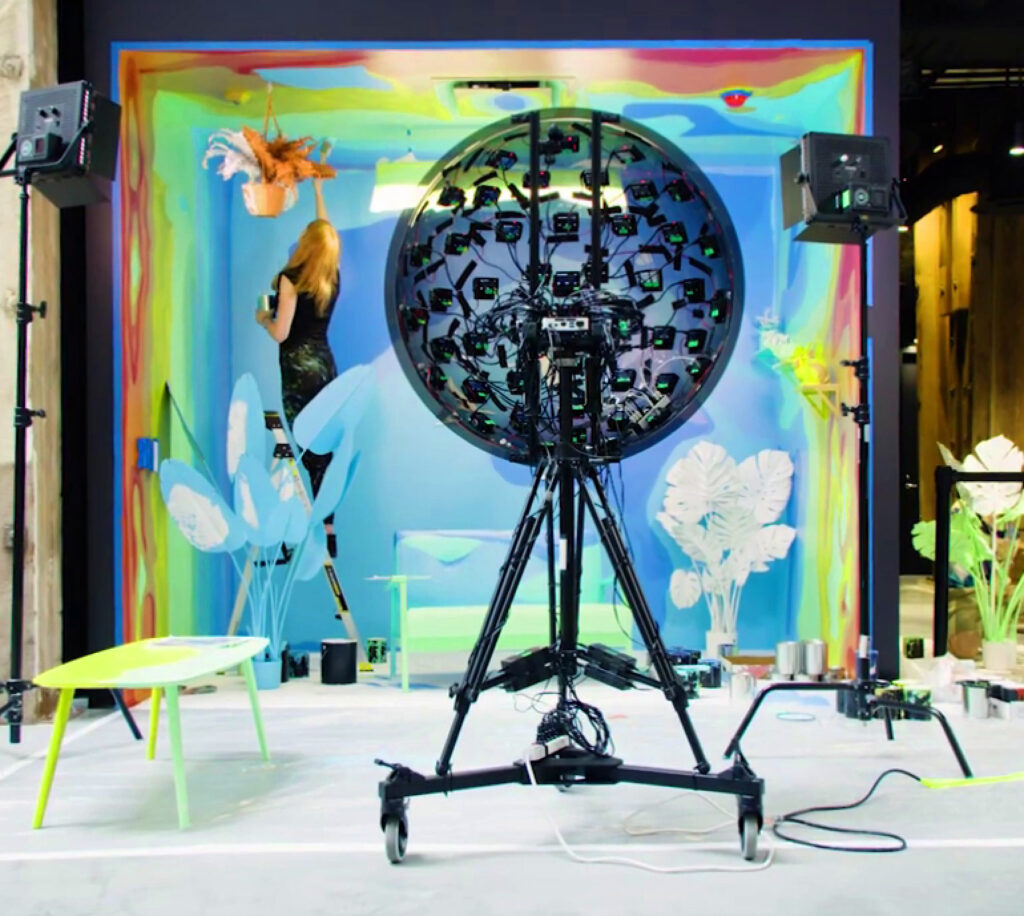
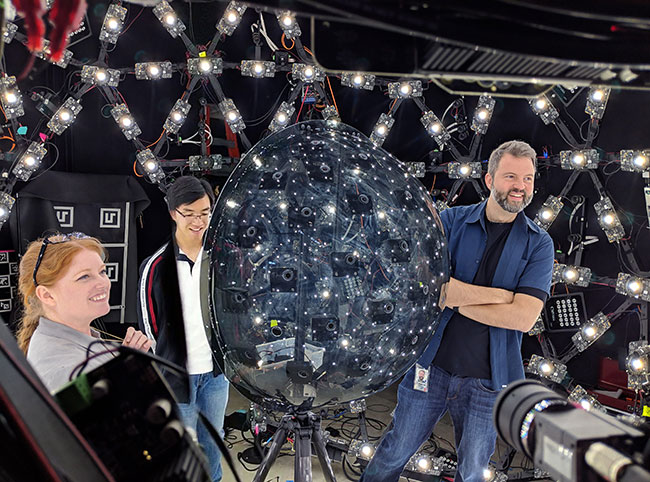
In this talk, I will showcase the latest work we've done at Google and the USC Institute for Creative Technologies to connect the real and virtual worlds through photography, lighting, and machine learning. I will begin by describing our DeepView solution for Light Field Video: Immersive films that you can move through after they've been recorded. Our latest light field video techniques can record a six-degrees-of-freedom virtual reality, where individuals can get close enough within arm's reach. I will also present how Google's new Light Stage, paired with machine learning techniques, is enabling new techniques for face lighting estimation for Augmented Reality and interactive portrait re-lighting on mobile hardware. Finally, I will discuss how these two techniques can make possible the next advancements in virtual filmmaking, bringing together light fields and re-lighting in real-time image-based lighting techniques, which are now revolutionizing the way films and television are made.